
Water treatment protects public health by making unsafe supplies fit for daily use without interruption. In the United States, this responsibility falls on a vast, regulated public network overseen by the Environmental Protection Agency that serves about 90% of the population through more than 148,000 individual systems.
That scale shows how foundational the water treatment process is to modern life. Utilities run the process of water treatment continuously to manage physical particles, chemical conditions and biological hazards. These coordinated controls maintain consistent water quality from initial collection through storage, distribution and final delivery to water in your home.
What Is Water Treatment?
Water treatment describes the steps public utilities use to make water safe and suitable for everyday use. In municipal settings, the focus is on drinking water treatment delivered through regulated municipal water treatment systems that serve homes, schools, healthcare facilities and businesses.
These systems apply coordinated water treatment processes to remove suspended particles, manage chemical balance and reduce health risks before water enters the distribution network. The objective is consistent potable water treatment that meets regulatory standards and performs reliably at scale.
Filtration media, filter cartridges and housings function as core components within modern water treatment systems, supporting stable operation, protecting downstream infrastructure and maintaining dependable water quality across public supply networks.
Where Does Drinking Water Come From?
Drinking water comes primarily from two natural water sources: surface water and groundwater. Public systems depend on both, depending on geography, climate and local availability.
The source of water matters because each type carries a distinct mix of physical material, dissolved substances and biological activity. Those differences directly influence later water treatment decisions. Water treatment is based on the quality of the source water, not a one-size-fits-all approach.
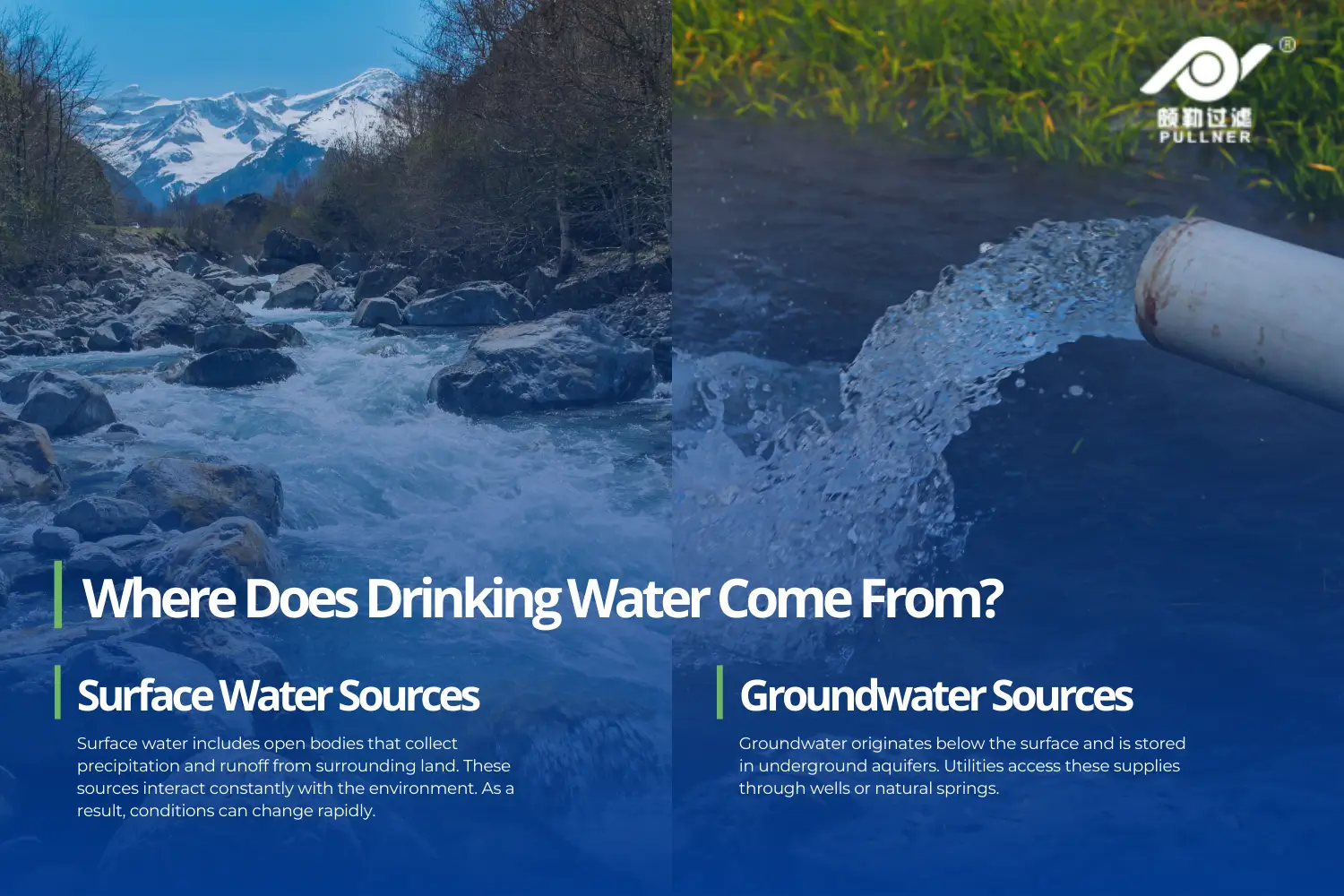
Surface Water Sources
Surface water includes open bodies that collect precipitation and runoff from surrounding land. These sources interact constantly with the environment. As a result, conditions can change rapidly.
Common surface water sources include:
- Rivers, lakes, reservoirs and streams.
- Waters are exposed to rainfall, seasonal weather and surface runoff.
- Supplies are influenced by human activity, wildlife and vegetation.
Surface water often contains higher turbidity, elevated organic matter and a greater presence of pathogens. These characteristics increase microbial risk. Utilities must account for that variability when planning later treatment of water to deliver safe water for drinking.
Groundwater Sources
Groundwater originates below the surface and is stored in underground aquifers. Utilities access these supplies through wells or natural springs.
As water moves through soil and rock, natural filtration occurs. This process removes many suspended particles. Groundwater quality also tends to remain more stable over time.
Typical groundwater traits include lower pathogen levels than surface water and higher concentrations of dissolved minerals. Iron, manganese and calcium are often present in the water, affecting hardness and taste.
While groundwater may begin cleaner, some sources still pose biological or chemical risks. These conditions shape how utilities approach water treatment to protect the long-term public supply.
How Does Water Treatment Work?
Water treatment begins when raw water collected from a natural source is conveyed into a treatment facility. Once water enters the system, it moves through a planned series of cleaning actions designed to reduce different types of contamination.
While many facilities follow a general progression, not every water treatment plant relies on the same sequence or configuration. Some contaminants, particularly certain dissolved chemicals, may require specialized treatment outside a standard flow path.
Across water treatment processes, utilities apply multiple coordinated steps to manage particles, chemical conditions and biological risks. These actions work together to produce potable water that meets safety requirements for public use.
By the end of the process of water treatment, the finished supply is suitable for distribution as safe, reliable tap water, demonstrating how water treatment works in practice without relying on a single fixed design.
How Do Water Treatment Plants Work?
Water treatment plants operate as integrated facilities that guide incoming water through a sequence of controlled cleaning actions. No single unit performs the work alone. Instead, layout, equipment and monitoring systems function together to manage flow and treatment.
A typical drinking water treatment plant includes several physical components:
- Raw water intake structures that draw supply from rivers, lakes, reservoirs or wells.
- Basins and tanks that provide time for mixing, chemical contact and settling.
- Filter beds or filter units that perform water treatment filtration.
- Clearwells or storage tanks that hold treated water before distribution.
Operators manage the water treatment plant process from control rooms that display real-time data. Pumps move water between stages, mixers distribute chemicals and feeders regulate water treatment chemicals.
Disinfection systems provide complete microbial control. Continuous sensors track flow, turbidity and disinfectant levels throughout the day. Because these facilities operate without pause, water treatment plants depend on steady energy input and routine maintenance to keep the public water supply reliable.
The Main Steps in Water Treatment
The water treatment process follows a structured set of actions designed to remove contaminants and protect public health. The specific steps used depend on the water source and the risks present, so not every system applies the same sequence.
Some supplies, particularly certain groundwater systems, may require only limited treatment such as disinfection. Most water treatment plants, however, use multiple coordinated steps to control physical solids, chemical conditions and biological threats, forming the foundation of the water purification process used in municipal water treatment.
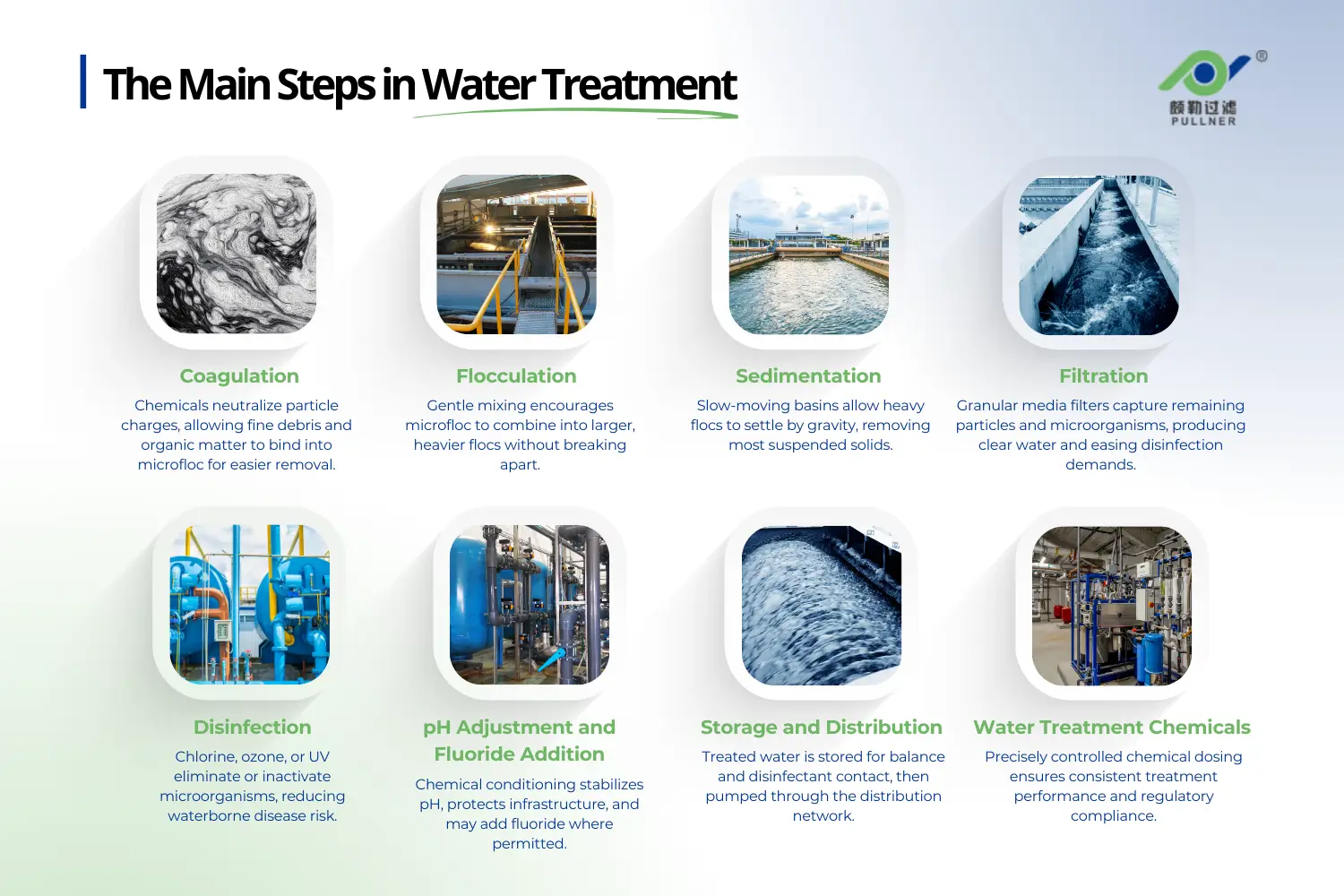
Coagulation
Coagulation begins when operators add chemicals to the water to destabilize suspended particles. Common water treatment chemicals include alum and ferric salts, which neutralize electrical charges that keep particles apart. Once neutralized, fine debris and organic matter begin to bind together. This reaction forms tiny clusters known as microfloc.
Flocculation
Flocculation introduces gentle, controlled mixing. Slow stirring increases contact between microfloc particles without breaking them apart. Over time, these particles combine into larger, heavier flocs. This growth prepares the material for efficient removal in the next stage.
Sedimentation
During sedimentation, water moves into calm basins where flow slows significantly. Gravity causes the dense flocs to settle to the bottom of the water as sludge. This step removes a large portion of suspended solids. Clarified water then flows onward for further treatment.
Filtration
The water filtration process removes remaining fine material after sedimentation. Water passes through layers of granular media such as sand or anthracite. These filters trap small particles, residual flocs and some microorganisms. Water treatment filtration produces visibly clear water and reduces the load on downstream disinfection systems.
Disinfection
Disinfection targets microorganisms that remain after earlier treatment steps. Chlorine, ozone, and ultraviolet light are widely used water treatment methods for microbial control.
Each approach either destroys organisms outright or prevents bacteria and viruses from reproducing. This step reduces the risk of waterborne disease and supports safe delivery through the distribution system.
pH Adjustment and Fluoride Addition
Chemical conditioning adjusts acidity to control corrosion and improve taste. Utilities use lime or carbon dioxide as a water treatment chemical to stabilize the pH of the water ph. In some locations, fluoride compounds are added where authorized to support dental health. These adjustments protect infrastructure and consumer safety.
Storage and Distribution
Finished water enters clearwells or reservoirs after treatment. Storage provides contact time for disinfectants and balances demand across the system. Pumps then move treated water into the distribution network. This stage preserves quality as water travels from the treatment plant to your tap.
Water Treatment Chemicals
Chemical water treatment depends on accurate dosing and timing. Coagulants, flocculants, disinfectants, pH adjusters and fluoride compounds each serve a defined role. Automated systems regulate feed rates based on flow and quality data. Precise control allows water treatment systems to meet performance and regulatory goals consistently.
Regulations for Safe Water
Regulatory standards protect public health by setting enforceable limits on what can remain in treated water. These rules define allowable levels for microorganisms, chemical substances, turbidity and disinfectant residuals to preserve consistent water quality.
In the United States, the Environmental Protection Agency administers these requirements under the Safe Drinking Water Act. Public systems must conduct routine monitoring, document results and report findings to regulators. This oversight structure supports accountability and safeguards the long-term safety of drinking water supplied to communities.
Water Treatment FAQs
Can treated water still have taste or odor issues?
Yes, disinfectants, aging pipes and naturally occurring minerals can affect taste or smell. Utilities often address these issues through treatment adjustments. Many households add water filtration or filter cartridges for extra control at the tap.
Are all public water systems the same size?
No, public systems vary widely. Some serve small rural communities with only a few dozen people, while others deliver drinking water to millions across large metropolitan regions.
Why is PH adjustment important?
pH adjustment protects pipes from corrosion and helps stabilize taste. Proper control reduces the chance of metals, including lead, entering water for drinking from plumbing materials.
Can filter cartridges be used in home water treatment?
Yes, filter cartridges are widely used in household water treatment systems. They appear in point-of-use and point-of-entry setups. These systems provide added contaminant reduction and often improve taste and clarity beyond municipal water treatment alone.
Back to Top: Water Treatment | Drinking Water Sources, Stages & Filtration
 English
  Spanish
  Arabic