Capsule Filters for Process and High-Purity Filtration
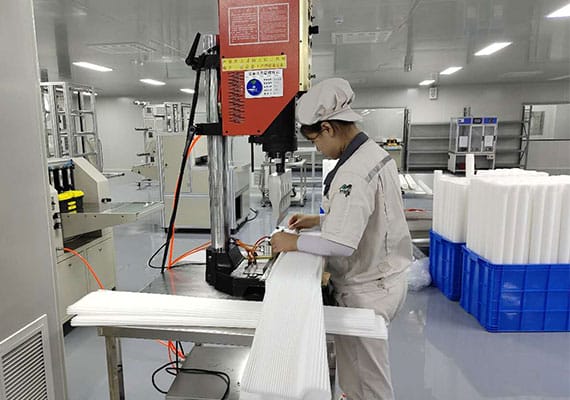
Pullner manufactures capsule filters for process and high-purity duties where a housing cannot be cleaned between batches. Each capsule seals a pleated element inside a molded polypropylene body, rated 1 to 10 micron at 1 to 10 GPM, in polypropylene, glass fiber, PES or PTFE media with NPT or Swage connections. Used in semiconductor process chemicals, pharmaceutical buffers, inkjet inks, battery electrode slurry and field water sampling. Cleanroom produced, integrity tested per element, ISO 9001 certified, 10 working day lead time, minimum order 50 pieces. Send us your fluid, flow rate and micron rating and we will specify a capsule against those conditions.
In-house Lab Testing
ISO 9001 Certified
Global Delivery
Need Help Selecting?
Our engineers can help you choose the right filter for your application
Capsule Filters
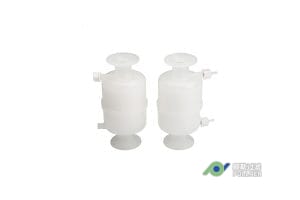
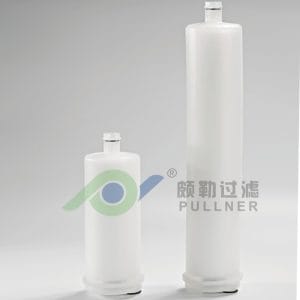
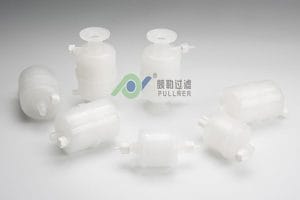
4Semiconductor Capsule Filter Cartridge, N/S Series
- Flow Rate:
- 1–10 GPM
- Micron:
- 1–10 µm
- Temp:
- 50°C (122°F)
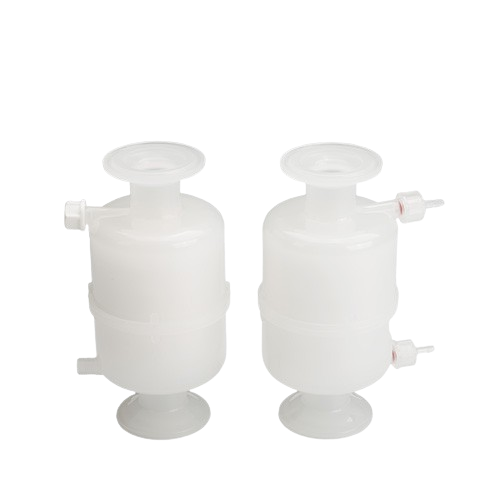
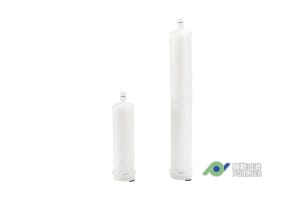
Industrial Inkjet Ink Capsule Filter, N/S Series
- Flow Rate:
- 1–10 GPM
- Micron:
- 1–10 µm
- Temp:
- 50°C (122°F)
Need Help Selecting?
Our engineers can help you choose the right filter for your application
Filter and Housing in One Sealed Unit
Capsules remove the cleaning step, not just the filter. A cartridge needs a housing you own, clean and — in regulated service — validate after every batch. A capsule is element and housing in one sealed piece: at change-out the whole unit is replaced, so there is no cleaning cycle to document and no cross-contamination path between products.
Suited to small batches, valuable fluids, frequent changeovers and multi-product lines.
Why Engineers Specify a Capsule
- No cleaning validation
- Lower fluid loss at change-out
- Faster changeover
- Sized to the batch
- No adhesives, thermal welded
Capsule Filter Specifications by Series
| Series | Micron | Media | Body OD | Lengths | Connections | Flow Rate | Max ΔP | Max Temp |
|---|---|---|---|---|---|---|---|---|
| N/S | 1–10 µm | PP · Glass Fiber · PES · PTFE | 72mm | 114 / 138 / 152 / 183 / 202mm | 1/4″, 3/8″, 1/2″ NPT & Swage | 1–10 GPM | 4.1 bar / 60 PSI | 50°C · 100°C on PTFE |
| PRI | by media | PP | 77mm | 195 / 325 / 583mm | 1/4″ NPT exhaust valve | — | 0.3 MPa @ 20°C | 80°C |
| PRS | by media | PP | 250mm | 378mm | 1/4″ NPT exhaust valve | — | 0.5 MPa @ 20°C | 80°C |
| RK12 | by media | — | — | 5″ / 10″ / 20″ | — | — | — | — |
Media selection. PP for general process and viscous fluids, nominally rated. PES for aqueous fluids where recovery matters — hydrophilic, low protein-binding. PTFE for gas and vent duty and aggressive chemistry — hydrophobic, needs pre-wetting for liquids. Glass Fiber for pre-filtration where dirt-holding sets the change-out interval.
Depth or membrane. PP and Glass Fiber are depth-loading and nominally rated. PES and PTFE are membrane and absolutely rated — required where a process must demonstrate retention.
Connections. Every new body size or adaptor needs its own tooling. Those listed are in production; anything else is a tooling conversation, so raise it early.
All series: ISO 9001, minimum order 50 pieces, 10 working day lead time.
Where Our Capsule Filters Are Used
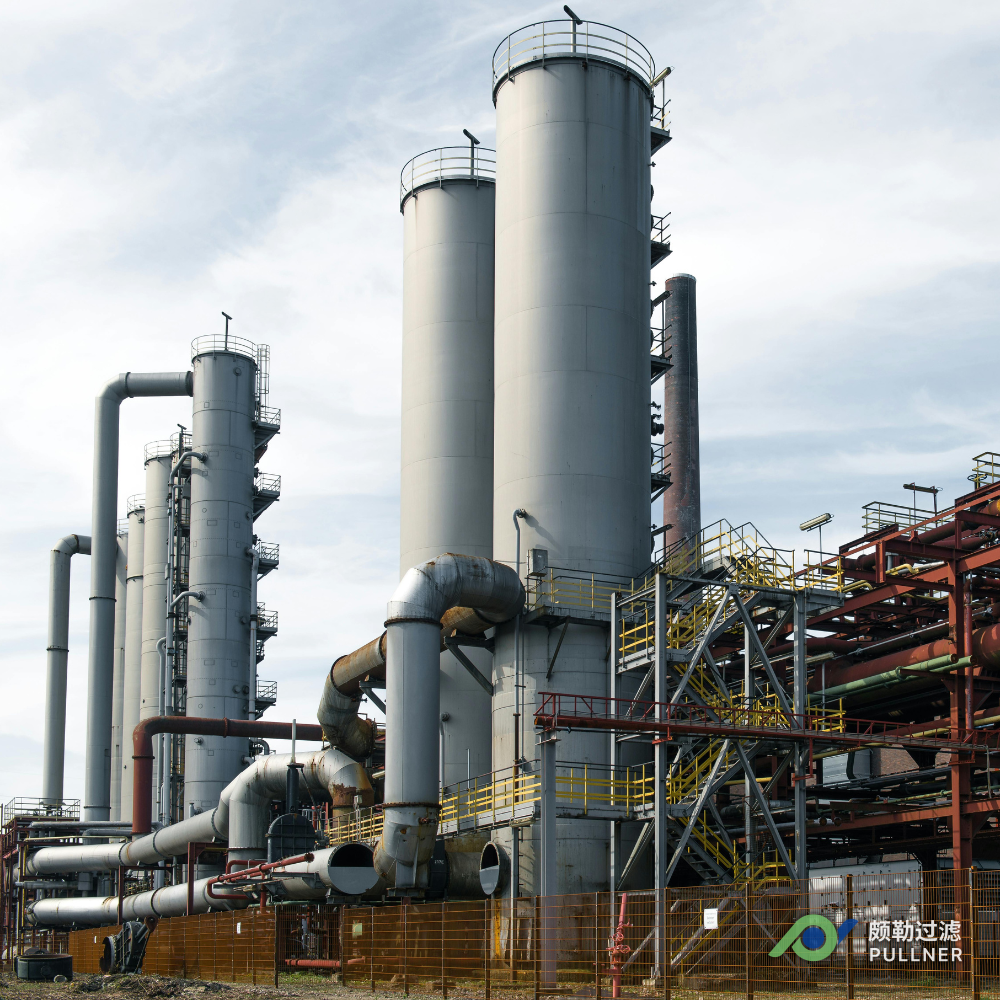
Pullner capsule elements are specified across six duties where a housing cannot be cleaned between batches, or where the fluid is too valuable to leave behind in a filter — from semiconductor process chemicals and pharmaceutical buffers to battery electrode slurry and field water sampling.
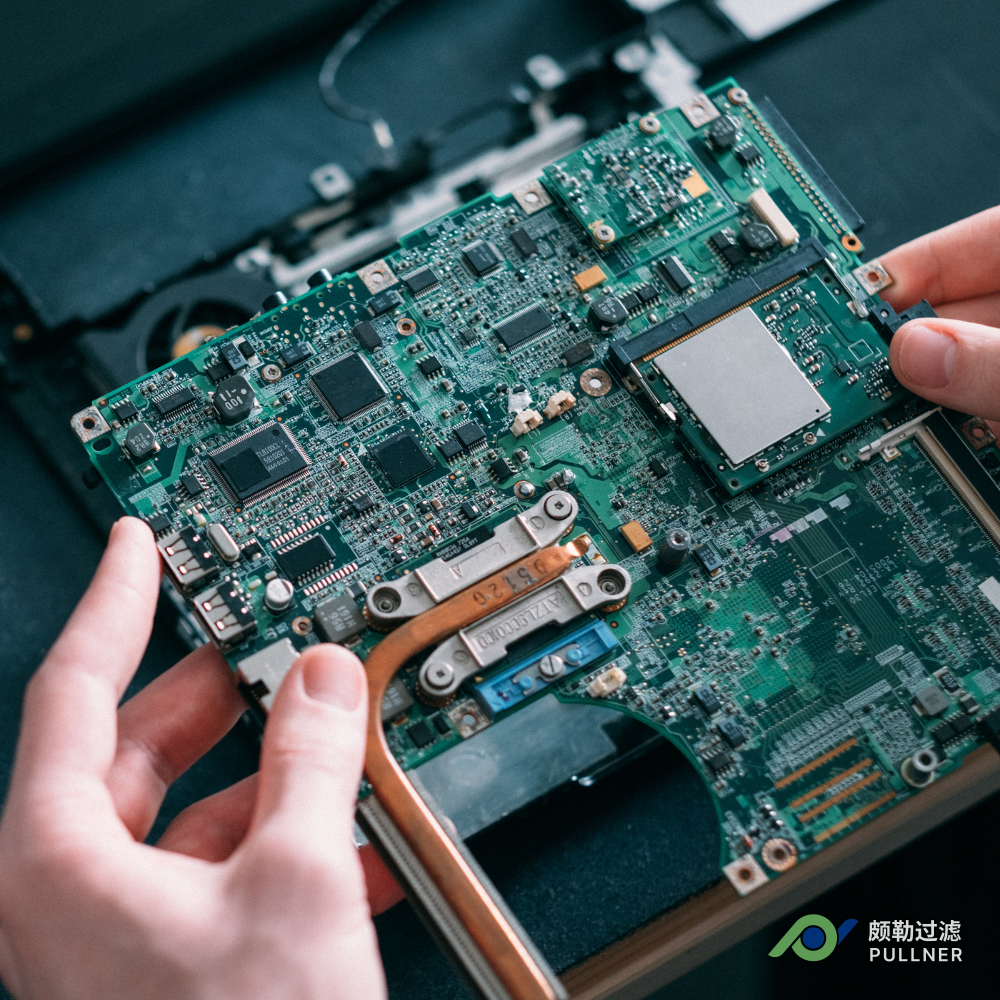
Cleanroom produced and integrity tested per element, for process chemicals, solvents and developers where particle count determines wafer yield.
Removes the cleaning validation burden on buffer, media and final filtration — plus tank and fermenter vents on hydrophobic PTFE.
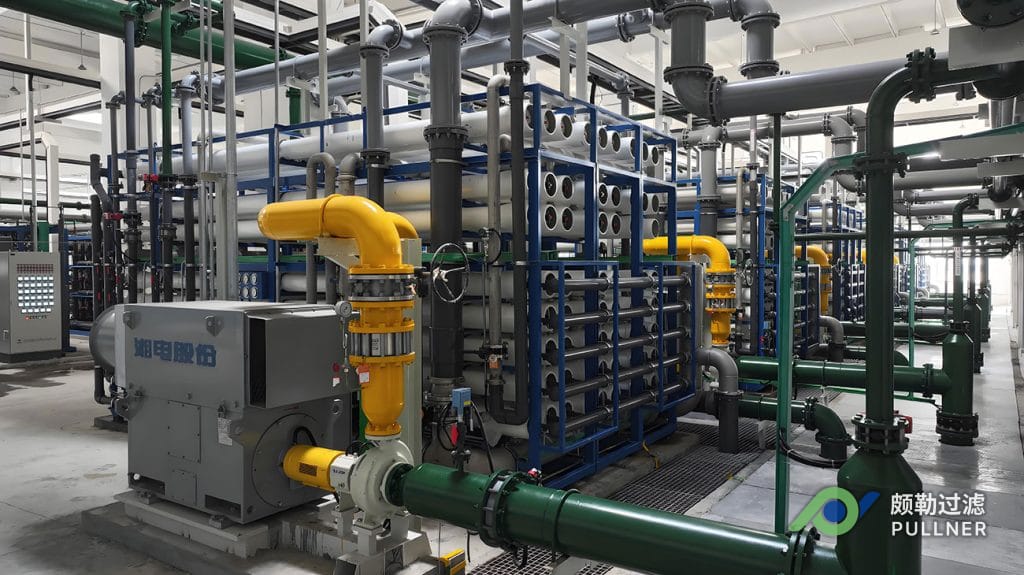
Specified for seawater pre-treatment, where a sealed unit avoids the cleaning cycle a housing would need between campaigns.
Used once on site with nothing to clean afterward — the shortest N/S body with a 1/4″ connection suits field sampling.
Changes without cleaning a vessel between colors, in five body lengths with NPT or Swage adaptors to fit existing machine plumbing.
The PRI capsule recovers expensive electrode slurry and coating liquid that a conventional filter leaves behind at change-out.
Why Choose Pullner Filter?
More than just a supplier – we’re your technical partner in filtration solutions
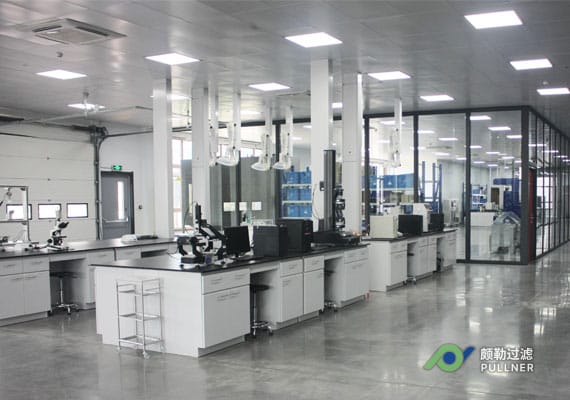
Laboratory and Testing Facilities
In-house testing capabilities for materials and quality assurance with advanced equipment and certified technicians.
- Particle counting analysis
- Pressure drop testing
- Material compatibility testing
Design and R&D Services
Position as technical partner, not just supplier. Custom solutions for your unique challenges.
- Custom filter design
- System optimization
- Technical consultation
Free Services
Comprehensive free services to support your filtration needs without any hidden costs.
- Free testing for filtration systems
- Free custom filtration design
- Up to 2 free samples
Global Manufacturing
State-of-the-art manufacturing facilities with worldwide delivery capabilities and local support.
- ISO 9001 certified facilities
- Global logistics network
- Local technical support
Common Questions About Capsule Filters
A capsule filter is a pleated element sealed inside a molded polypropylene body — filter and housing in one disposable unit. There is no separate vessel to buy or clean. At change-out the whole capsule is replaced, removing the cleaning cycle and the cross-contamination path between batches.
A cartridge is the element only and sits in a housing you own and clean. A capsule includes the housing and is replaced complete. Cartridges cost less per change-out; capsules remove the cleaning and validation step. In regulated service that is usually the deciding factor, because a vessel cleaning cycle must be validated and documented while a disposable capsule need not be.
When the fluid is valuable, the batch is small, changeovers are frequent, or there is no window to clean and validate a vessel. Capsules also suit multi-product facilities, because replacing the whole unit removes the carry-over path between products. For continuous high-volume duty on one fluid, a cartridge and housing is usually cheaper.
Four media options: Polypropylene (PP) for general process and viscous fluids; Polyethersulfone (PES) for aqueous fluids where recovery matters, being hydrophilic and low protein-binding; PTFE for gas and vent service and aggressive chemistry, being hydrophobic with the broadest chemical resistance; and Glass Fiber for pre-filtration where dirt-holding capacity sets the change-out interval.
The N/S capsule series is rated 1 to 10 µm. PP and glass fiber are nominally rated; PES and PTFE are absolutely rated, which is what lets a process demonstrate retention. Non-standard ratings are available on request.
N/S capsules are 72mm outer diameter in five body lengths — 114, 138, 152, 183 and 202mm — with 1/4″, 3/8″ and 1/2″ NPT and Swage connections. PRI is 77mm diameter at 195, 325 or 583mm. PRS is 250mm at 378mm. Custom bodies and adaptors require new tooling, so raise them early.
N/S: 4.1 bar / 60 PSI maximum differential, 50°C standard and 100°C on PTFE configurations. PRI: 0.7 MPa design pressure, 0.3 MPa differential at 20°C, 80°C. PRS: 0.8 MPa design pressure, 0.5 MPa differential at 20°C, 80°C. Change out on differential pressure at constant flow rather than elapsed time.
We review second-source options against your operating conditions for Pall AcroPak, Whatman Polycap TC/AS/HD/SPF, Millipore Polygard and Durapore, Meissner, Sartorius, Pentair, GVS and Pureflo capsules. Send the part number, fluid, flow rate and connection type. We do not claim a match before it has been validated on your process.
Ten working days on N/S capsules, minimum order 50 pieces. Tell us your delivery location and we will confirm shipping.
In liquid process filtration the four families are depth filters, which load dirt through the thickness of the media; pleated membrane filters, which retain at a rated pore size on the surface; capsule filters, which seal an element inside a disposable housing; and bag filters, which use a sewn or welded fabric bag inside a vessel. Pullner manufactures the first three. A capsule is a format rather than a media type, so a capsule can contain either a depth media such as polypropylene or glass fiber, or a membrane such as PES or PTFE.
A membrane filter is used where a process has to demonstrate retention rather than estimate it. Depth media are nominally rated, meaning a stated percentage of particles at a given size; a membrane is absolutely rated, so it is what you specify for sterile filtration, final filtration before filling, and any duty subject to validation. In Pullner capsules the membrane options are PES for aqueous fluids where recovery matters, and PTFE for gas, venting and aggressive chemistry. Both are integrity testable in place.
Speak to Our Filtration Expert
Get in touch with our expert team for custom filtration solutions