
Many second-source requests start and stall with the same mistake: a part number sent on its own, with no way to confirm fit until a sample has already been ordered. An accurate second-source filter cartridge validation starts with complete details of the existing cartridge and its operating conditions instead.
Send the Pall or Parker part number, end-cap configuration, dimensions, micron rating, filter media or material, and application details. Together, these specifications support a proper filter fit check and help determine whether a proposed cartridge is suitable for the required duty.
Brand identification alone can’t confirm housing fit, sealing arrangement, material compatibility, or suitability for the application. Photographs can support cartridge end cap identification during initial review, but documented technical specifications should guide the final assessment.
Treat each proposed cartridge as a compatible replacement option or second-source candidate, validated after a fit check. Sample evaluation, documentation review, and a trial run should confirm suitability before the facility changes suppliers.
What to Send for a Pall Cartridge Replacement
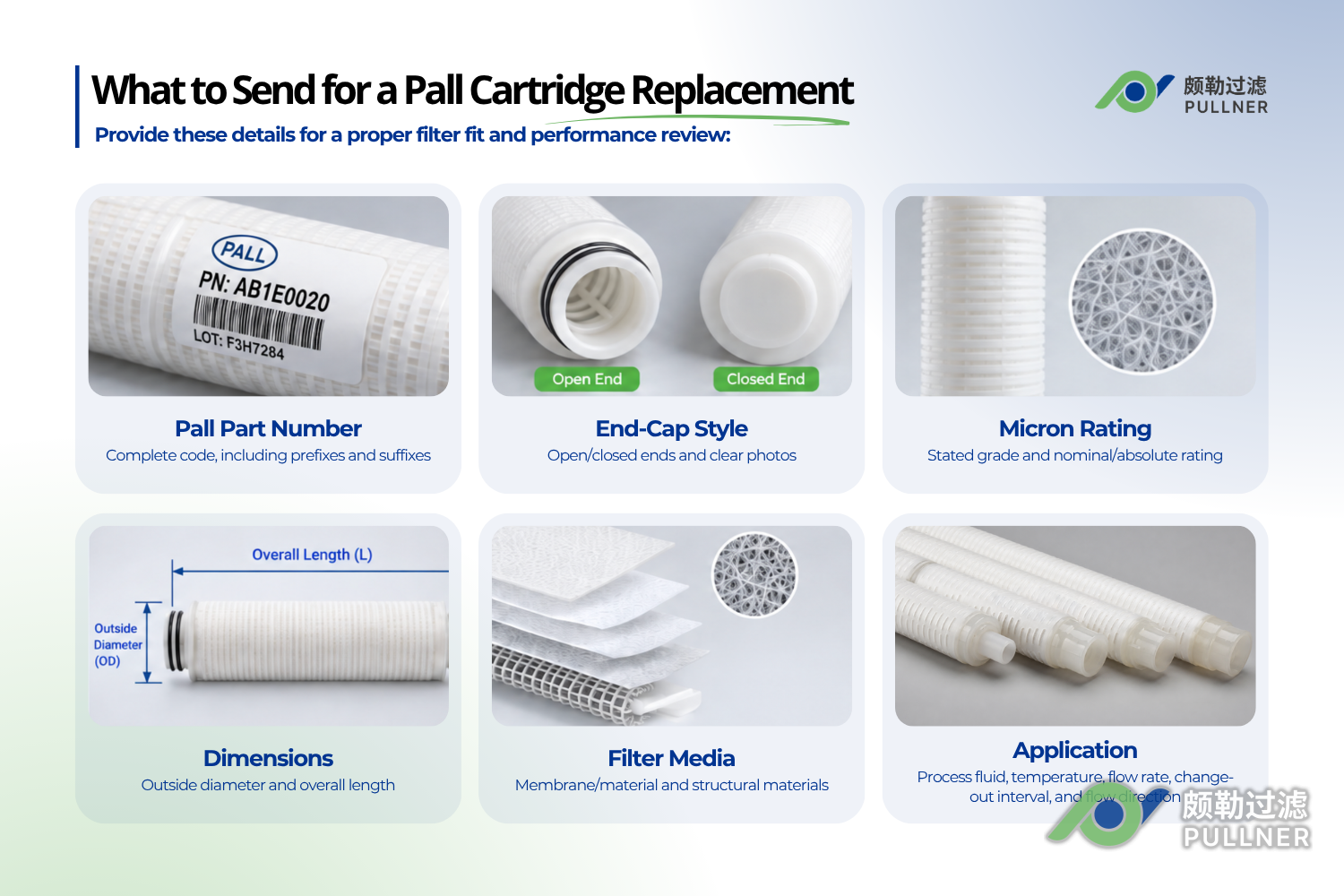
Requests to replace Pall filter cartridge models should include as many of the following details as are available for technical review. A part number can begin a cross-reference review, but it doesn’t replace a complete filter fit check.
- Existing Pall part number: Copy the complete identifier from the cartridge label, packaging, or verified purchasing record. Preserve each prefix, suffix, and separator because product codes can contain model-specific construction details requiring confirmation.
- Cartridge end-cap style: Identify the open-end connection and closed-end design before comparing the cartridge with another model. Include clear photographs showing the sealing surface and any feature that locates the element inside its housing.
- Micron rating: Record the stated grade and whether the manufacturer describes its retention as nominal or absolute. Equal micron numbers can represent different performance when manufacturers apply different efficiency definitions or test methods.
- Cartridge dimensions: Where safe site procedures allow, measure the outside diameter and overall length after removal. Otherwise, provide an available drawing, verified part record, or installed-housing details supporting the technical fit review.
- Filter media or material: Identify the filtration medium and structural materials when purchasing records provide them. Material selection affects chemical compatibility and operating temperature, so an apparent dimensional match may remain unsuitable for the process fluid.
- Application details: Provide the process fluid and normal operating temperature for the specific installed cartridge position. Add the required flow rate, current change-out interval, and confirmed flow direction for the technical assessment.
What to Send for a Parker Cartridge Replacement
For a Parker filter cartridge replacement, provide as many of the following details as are available for technical review. Part-number structures can identify model-specific construction details that require confirmation against relevant product documentation during the technical review.
- Existing Parker part number: Record the complete code exactly as shown on the cartridge or verified purchasing record before checking a cross-reference table. Preserve every prefix, suffix, and separator, then check the model-specific details against relevant manufacturer documentation where available.
- Cartridge end-cap style: Show the connection geometry and O-ring arrangement in a photograph taken directly from the open end. Include a second photograph of the opposite end because flat caps and locating fins serve different housing configurations.
- Micron rating: Record the printed micron grade and stated efficiency basis shown on the current cartridge data sheet. A micron rating needs retention context before engineers can compare its filtration performance with another manufacturer’s product.
- Cartridge dimensions: Use a verified drawing or product record when either source provides the model’s complete dimensional information. Where safe site procedures permit cartridge removal, confirm its outside diameter and overall length against those documented measurements.
- Filter media or material: Name the filtration media and support materials shown in the available technical records. Operating fluid and temperature determine whether the proposed construction remains compatible throughout the expected production cycle.
- Application details: Describe the filtered process fluid and filtration objective for the specific installed cartridge position. Include documented flow requirements and existing service life, then confirm the required flow direction for the technical assessment.
Why End Cap Identification Matters
Cartridge end cap identification establishes how an element enters the housing and forms a seal against the correct internal connection. An incorrect connection can prevent full engagement or place the sealing components against the wrong housing surfaces.
A common failure in second-source qualification is a part number match that still fails at installation, because two cartridges with matching dimensions and micron ratings can still use different end-cap geometries.
Document each applicable end-cap feature separately so engineers can compare the candidate against its specific housing interface:
- Double-open-end arrangement: Gaskets at both ends form the seal, so the installed housing interface must support the corresponding cartridge design.
- Single-open-end arrangement: An integrated connection seals one end, leaving the opposite end closed with a product-specific locating feature.
- Connection style: Standard single-open-end cartridges may use a 222 or 226 connection with the matching O-rings and end configuration. A 226 design may include bayonet tabs, and both connection styles require their corresponding housing interfaces.
- Closed-end geometry: Record whether the closed end has a flat cap, fin, spring, or another locating feature. The matching housing interface determines how the complete filter element seats and aligns during its installation.
- Seal specifications: O-ring size and material affect sealing performance and process compatibility, so the request should record both available specifications.
- Cartridge photographs: Clear images from both ends help engineers compare visible geometry when the configuration code remains unavailable or incomplete.
- Product-family scope: Standard 222 and 226 connections differ from the large single-open-end seals used by many high-flow cartridges. Confirm the installed element’s exact product family and required flow direction through the available technical documentation.
How to Validate a Second-Source Cartridge Before Switching
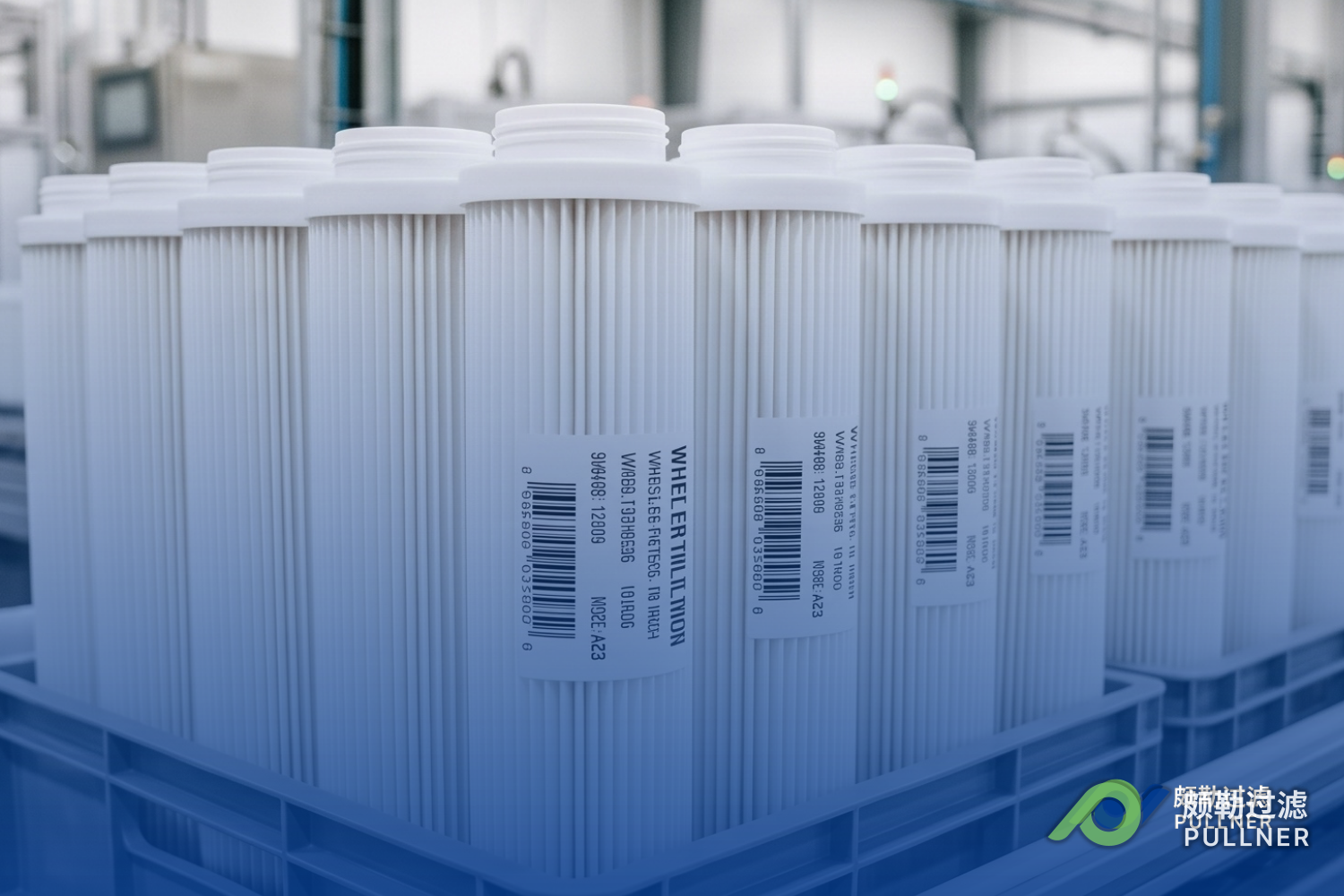
Use the following nine stages to compare each candidate against the installed housing, operating duty, and facility-defined qualification requirements:
- Review the supplied identification: Confirm the current manufacturer and complete the part number against the cartridge label. Resolve incomplete model characters against available purchasing records before selecting any candidate for a detailed technical review.
- Confirm the end-cap configuration: Compare the cartridge’s open-end connection and closed-end geometry with the installed housing interface. Verify the complete O-ring specifications whenever available technical records identify the existing cartridge’s documented seal construction.
- Check the physical dimensions: Compare the complete element length and outside diameter against an available product drawing or verified part record. Include any adaptor or locating feature affecting the cartridge’s final installed position inside the existing housing.
- Match the filtration requirement: Compare the stated micron rating and documented efficiency basis for both cartridges. Review nominal or absolute classifications because identical micron numbers can represent different particle-retention levels between manufacturers.
- Review material compatibility: Compare the filter media and structural materials against the fully identified process fluid. Check all documented operating limits against the proposed cartridge construction under the facility’s expected service conditions.
- Confirm the application duty: Review the required flow and filtration objective for the installed cartridge position. Include the existing operating service baseline and confirm the required flow direction for the candidate cartridge.
- Evaluate the sample: Inspect physical fit and installation handling under the facility’s established controlled qualification procedures. Confirm correct seating and seal engagement before deciding whether the candidate can enter the planned trial.
- Run the process trial: Qualifying a replacement filter requires application-specific trial measures and acceptance criteria. Compare the candidate’s results with documented operating requirements and the existing service baseline under the qualification plan.
- Review the documentation: Confirm that submitted records correspond to the sampled cartridge and proposed production model. Document every identified construction difference through the facility’s internal qualification and formal approval process.
Speak to a Pullner Filter Engineer
A second-source switch works best with a technical partner, not just a parts supplier. مرشح بولنر can review your existing part number and end-cap style before assessing a compatible replacement option. Include the cartridge’s documented micron rating and measured dimensions because both directly affect accurate cross-reference selection. Provide the filter media and operating application so engineers can evaluate material compatibility and process suitability.
For existing Pall Ultipleat high-flow cartridges, review the relevant Pall Ultipleat replacement page after gathering the available identification and application details. Existing Parker high-flow cartridges can be compared against the Parker high-flow replacement page and its product-selection information.
Other Pall or Parker cartridge families require product-specific documentation because the linked high-flow pages don’t cover every connection style or application. Send your cartridge information to Pullner Filter to begin the fit check and request a sample for qualification, or speak to a Pullner Filter engineer to get started.
FAQs on What to Send Before Replacing a Pall or Parker Cartridge
What information is needed to replace an existing Pall, Parker, or 3M CUNO cartridge?
Provide the complete part number and end-cap style shown on the existing cartridge or its technical records. Include the measured cartridge dimensions and documented micron rating, then identify the filter media or material. Describe the application conditions so Pullner Filter can assess a compatible replacement option and complete a filter fit check.
How should a facility validate a second-source filter cartridge before switching?
Complete the documented filter fit check before installing any candidate sample within a controlled qualification trial. Review the candidate’s documentation against the required construction and process duty for the installed cartridge position. Record the measured trial performance under defined operating conditions before approving any broader second-source supplier change.
Why is end cap identification important when replacing a filter cartridge?
End-cap style controls how the cartridge enters the housing and seals against the corresponding internal connection. An incorrect configuration can prevent proper engagement even when the dimensions and micron rating appear to match. Provide clear end photographs and available configuration codes with every replacement request submitted for technical review.
What if the exact part number isn’t available?
Send the clearest identification available instead—cartridge photographs, measured dimensions, micron rating, and any partial code from the label or purchasing record. Pullner Filter can begin a preliminary cross-reference review from this information, though the end-cap configuration and dimensions still need to be confirmed before a compatible replacement option is proposed.
العودة إلى الأعلى What to Send Before Replacing a Pall or Parker Cartridge: A Second-Source Validation Checklist
 English
  Spanish
  Arabic